
What breed of dog is best for first time owners? Our in-depth guide makes choosing your pup simple.
If you’re a first time owner, finding the best dog breed for you can be tricky. Especially if you haven’t got much experience with other breeds.
There are over 200 dog breeds listed with the UK Kennel Club. But we’ve made it simple and narrowed it down to just seven breeds that would be ideal for a novice owner.
But first – a word to the wise. There isn’t just one dog breed that is best for a first time owner. It really is down to you and your individual circumstances.
The type of dog you get will be entirely down to how much time and effort you are able and willing to commit to raising your pooch.
Some dog breeds just need more training than others, or more exercise, and some dog breeds need you to basically give up on life as you know it and buy a sheep farm (hello Border Collies!). Well, perhaps not quite – but you will have to undergo a significant change in lifestyle.
So with those considerations in mind, I am going to assume that as a first time dog owner, you’re a novice at training. So the dogs listed below are easy to train for a novice – and hopefully, with a personality that suits your lifestyle.
Remember, picking a dog is far more than just picking a breed from a list, and each individual dog will have their own quirks and differences.
Don’t assume that all dogs within the same breed are exactly the same – you’ll still encounter different levels of playfulness, intelligence, and neediness even within the same breed. But picking a breed will – in general – give you as close to the characteristics you desire as possible.
So, without further ado, here’s our top seven breeds for first time owners…
1. Labrador Retrievers
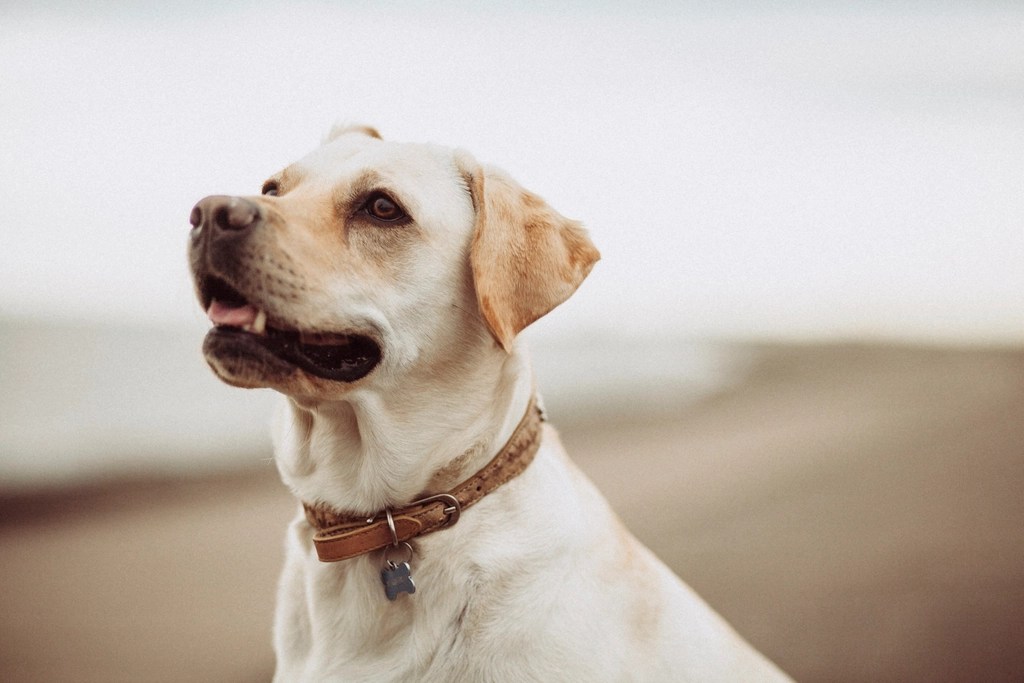
The ever-popular Labrador is top of my list when it comes to dogs for first time owners. Their tolerant, happy, easy-going personalities are what makes them so popular. Their coats require minimal grooming and they take to training beautifully! There’s a reason these dogs are so often used as guide dogs for the blind. They are fast learners and food motivated – so they will happily do any task in return for a treat.
If you choose a Labrador – you’ll have a friend for life.
They can live in most homes – rural or in a town – but are often considered too big for a small apartment. A garden is a plus as they do need lots of playtime and exercise – around 90 minutes daily, spread through the day (e.g. one long walk of an hour, including some playtime with a ball or frisbee or some training, and a 30 minute walk around the neighbourhood later in the day).
For most first time owners – go for a show line Labrador, rather than a working line. They have different exercise requirements and a show line is better suited as a pet.
The con when it comes to these dogs is that they are needy. They do prefer human company (as do all dogs) and you really need to think long and hard about whether you can provide the mental and physical stimulation that these dogs need. If not, opt for a smaller (and less intelligent!) breed that is lower maintenance.
2. Golden Retrievers
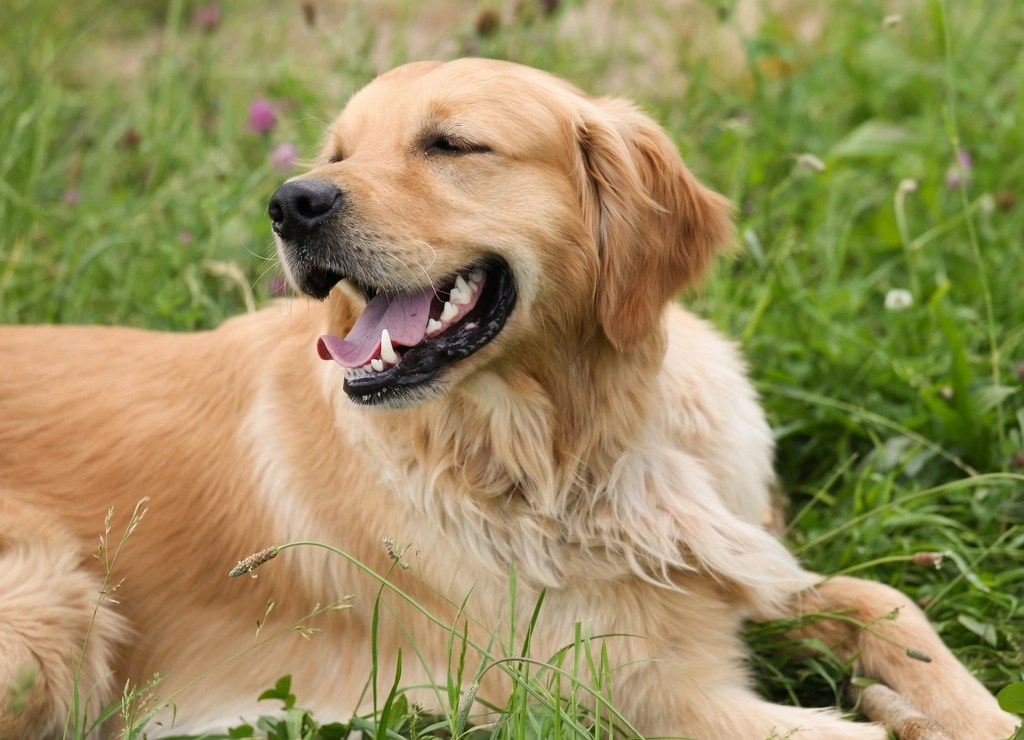
Golden Retrievers are a fabulous family pet and great with other pets, including cats.
How could you not love this happy, placid dog that just wants to be friends with everyone?
On the whole, they are fairly similar to the Labrador Retriever in personality except they have a long, luscious coat that will require more maintenance. A good brush a few times a week will be enough, however, as they do shed heavily.
But if you can put up with dog fur everywhere – you will have a dog that sails through potty training with ease, and will easily learn almost any task you wish. They will always be top of the class when you go to puppy training, and you should have a well-trained, and level-headed dog by adulthood. I say adulthood, because Goldens can take a while to mature – up to two years – which is much longer than some smaller breeds. So if that puts you off, step away now…
Again, Golden Retrievers need a lot of play, training time, and exercise. Around 90 minutes to two hours daily. So if this doesn’t fit into your schedule, consider a smaller dog.
3. Japanese Spitz
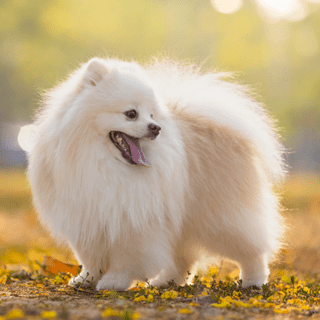
Looking for a smaller dog? The Japanese Spitz might just fit the bill. Being small, cute, and fluffy, they can live just about anywhere.
They aren’t the most intelligent dog breed in the world (a title arguably owned by the Border Collie), but they have playful, obedient, cheerful temperaments and they love to snuggle. Training might take a few extra repetitions but don’t write them off, as they are incredibly eager to please!
The Japanese Spitz is good with children and other dogs, and they don’t drool much at all – which is a plus if you’re averse to a drooling dog!
As a companion breed dog, they love their humans and love to be around you – and will be perfectly happy with two 30-minute walks daily (though it could end up being a little less with no ill effect).
They are fairly long-lived too, compared to the Labrador and Golden Retrievers, living 12-16 years, with minimal health problems (though watch out for luxating patellas – a nasty condition that means the kneecap will dislocate).
So those of you looking to invest slightly less time into exercising your dog, but still want a cute companion, the Japanese Spitz might be a good idea.
4. Rough Collie
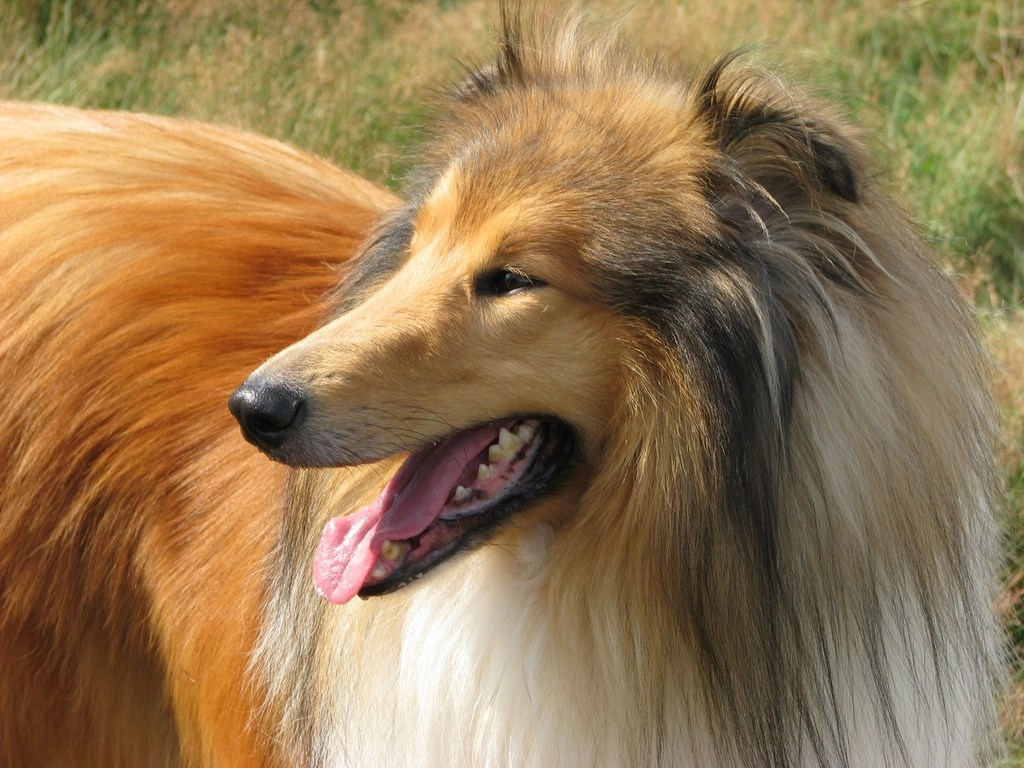
Rough Collies used to be super popular, but their numbers are declining lately. But don’t let that put you off!
These dogs are ideal for first time owners.
Intelligent, loyal, and affectionate, these dogs are the quintessential Lassie dog. Despite being long-haired, they are easy to care for. A good brush though daily or every other day will do. And despite what you might think, mud easily dries and drops off their coats after a muddy walk.
They also don’t require as much walking as a Golden Retriever – an hour in total through the day would be just fine. You could do this as one big walk, or split into two shorter walks.
You get a medium sized dog with the intelligence of a Golden Retriever, but with less exercise needs. They are noble, gentle dogs, who can live with other dogs and pets with careful introductions.
And if you work from home, they will be happy to laze on the bed or sofa whilst you get your work done, as they are more independent than a Labrador or Golden Retriever. A win all round for the work from home office worker!
5. Bernese Mountain Dog
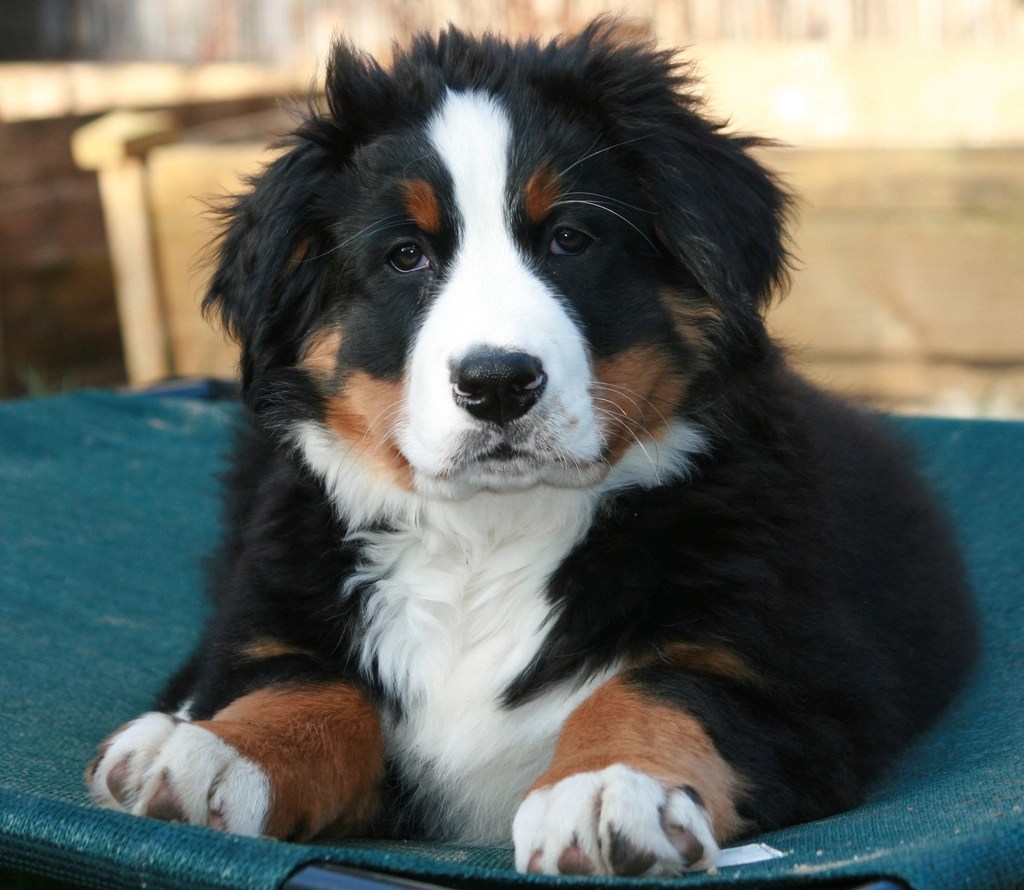
Looking for a gentle giant? The Bernese Mountain Dog could be the dog for you.
Generally described as the biggest lap dog in the world, they adore their humans and love to be with you. These complete goofballs will amuse you for hours with their ridiculous antics – and are great with children and other pets (for safety, I’d advise you to only consider them with older children or teenagers, however, as they could easily knock over an adult, let alone a child, with their exuberance).
Due to their size, they need training from Day 1 – ideally with a professional trainer who can show you how to handle their giant personalities. So if you’re the type of owner who intends to go to puppy training classes and on to advanced classes as your dog grows, this could be the ideal dog for you. They are easygoing and trainable, but with the slight challenge of controlling their enormous size.
If you have a large house and garden with enough space for these goofballs to derp around (and derp they do), you’ll be rewarded with a loyal dog who absolutely adores you.
Despite their large size, they also don’t need too much exercise. An hour a day is generally speaking enough, which again makes them a strong contender for those of you who like a placid, playful dog, but don’t want to put in the hours of exercise that a Golden Retriever would need.
The downside with these beautiful dogs is their short lifespans, with an average of around 6-8 years. They are capable of reaching a longer life, but you will need to do extensive research into an ethical breeder as, sadly, the breed is riddled with health problems.
If size doesn’t bother you, and you’re not afraid of getting the vacuum cleaner out on the daily – these soulful dogs could be ideal for you.
6. Poodle
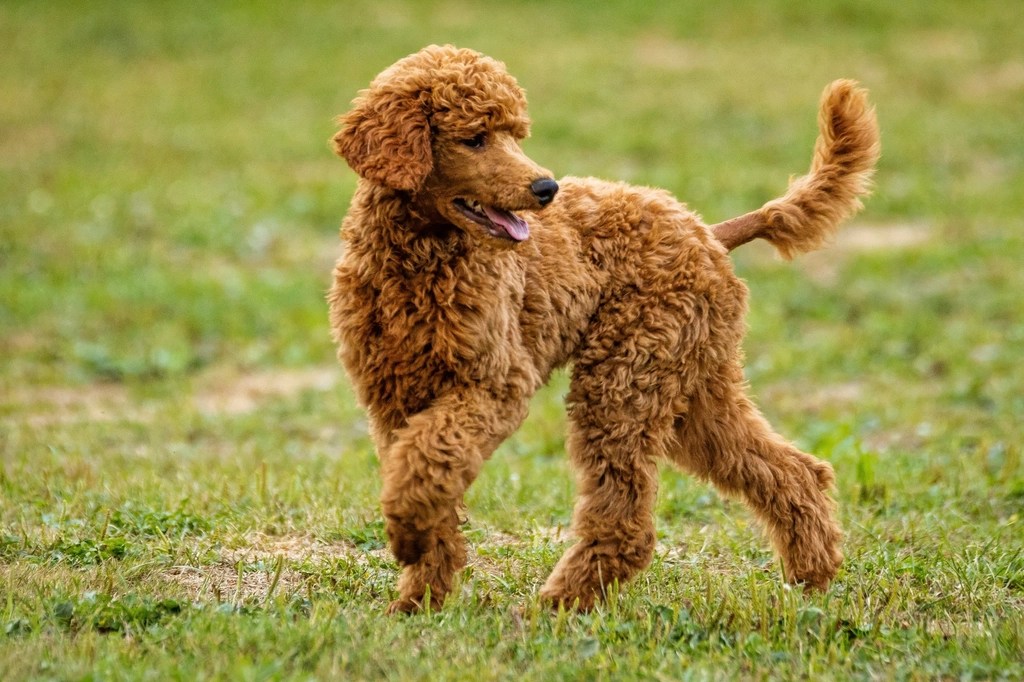
The recent craze for getting any breed of dog crossed with a poodle (think Cockapoo, Labradoodle, etc) seems to have made most people forget entirely about the Poodle in its own right. Which is a right royal shame – as these dogs have so many great qualities that are best enjoyed in their purest form.
Despite being considered a bit of a fru fru dog, they are actually highly intelligent and on the same level as Golden Retrievers in terms of trainability and intelligence. But the bonus part of these dogs is that they come in three sizes – Standard, Miniature, and Toy – so you can pick the size that suits your lifestyle.
For reference, a Standard Poodle is the largest size, and requires about an hour a day of exercise, play, and training – a far less onerous schedule than the Golden Retriever. The Toy Poodle, the smallest size, will be happy with a 30 minute trot and perhaps two play sessions in the garden.
These trainable dogs love people and they have energetic, playful personalities. That being said, the Poodle is often used as a therapy dog and can be placid when needed. They do well with children, though they can be more nervous and wary than others on this list – so would suit teenagers or an adult only household well.
7. Cavalier King Charles Spaniel

Sweet, gentle, loving, and obedient – all the qualities of a Labrador in a smaller package. It’s one of the reasons I just can’t forget about the Cavalier King Charles Spaniel.
Ideal with other pets, children (even very little children with supervision), elderly people, or just about anyone who wants a dog that loves to be with you 24/7.
These delightful dogs love their humans and will happily sit on your lap, gazing up at you with ‘please love me’ eyes.
They are easy to train, love to please, and are food orientated, so you won’t have any problem with getting them to behave.
The downside to these dogs is their health, which is in fairly poor shape. You will need to do heavy research in order to find an ethical breeder, as these dogs have a huge raft of serious health issues within the breed.
If you don’t have thousands of extra pounds lying around, and you don’t want to spend all your money on going to the vet – opt for a healthier breed instead, such as the Japanese Spitz (above).
A final thought
All first time dog owners are different – and so are the dogs they choose.
Remember, you’ll get as much out of a dog in terms of love and companionship as you put in. You need to dedicate time to reading about your chosen dog breed and carefully consider the pros and cons. Thankfully, you can read more in our Dog Breed A-Z.
And if you really feel like you don’t have the time or lifestyle to care for a dog, perhaps consider a hamster. Or a fish.
Liked this article?
If you found this article helpful, consider subscribing to keep up to date with the latest dog advice.
I have so many ideas planned – a book, a webinar series for first time puppy owners, a puppy search and select service, and an online dog training series. But it all begins with your subscription.
So go ahead… make our tails wag!

Leave a comment